Spinach (Spinacia oleracea L.) stands as an indispensable cool-season leafy crop across global commercial agriculture. Revered for its exceptional dietary density of iron, vitamins A, C, and K, and beneficial antioxidant carotenoids like lutein, commercial production is nevertheless challenged by narrow physiological windows. Achieving sustainable field yields exceeding twelve to sixteen tons per acre across multiple successions demands meticulous agronomic management of photoperiod sensitivity, high-temperature thermodormancy, soil salinity thresholds, downy mildew race diversity, and precise oxalate-nitrate biochemistry.
Critical Physiological Window
Spinach is an obligate quantitative long-day plant that rapidly transitions from vegetative rosette expansion to reproductive floral stem elongation (bolting) once photoperiods exceed 13.5 hours under temperatures exceeding 75°F (24°C). Maintaining continuous soil moisture and selecting genetically bolt-resistant cultivars are foundational to crop profitability.
1. Botanical Taxonomy, Morphology, and Cultivar Classification
Spinach belongs to the botanical family Amaranthaceae (formerly Chenopodiaceae), sharing physiological traits with Swiss chard and table beets. The crop exhibits a rosette vegetative growth habit characterized by spirally arranged basal leaves emerging from a compressed crown situated at the soil surface. Commercial production recognizes three distinct horticultural types:
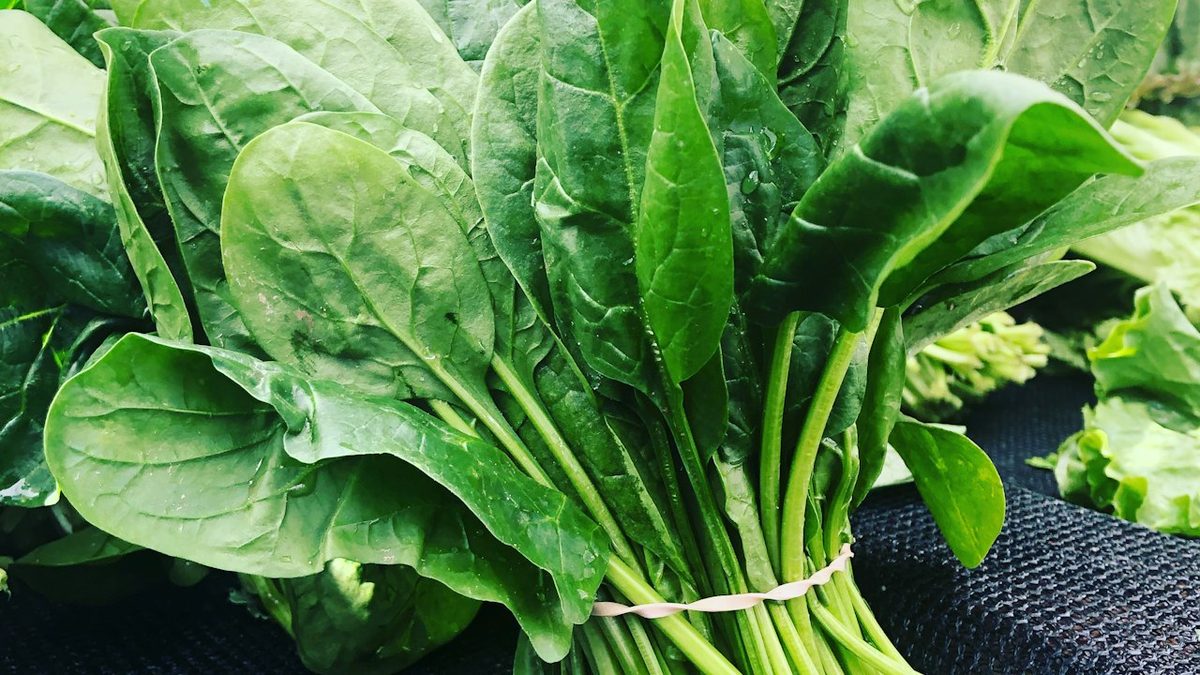
- Savoy Spinach: Produces deeply puckered, crinkled dark-green foliage with substantial textural rigidity. Savoy types offer outstanding cold-weather hardiness, making them ideal for autumn planting, overwintering, and fresh-market hand-bunching. However, their convoluted epidermal topography traps soil particles, requiring vigorous flume washing during industrial processing.
- Semi-Savoy Spinach: Displays intermediate leaf savoying, blending the structural resilience and appealing three-dimensional volume of savoy varieties with the easier washability of flat types. Semi-savoys represent the backbone of commercial mechanized fresh-market harvesting operations.
- Smooth (Flat-Leaf) Spinach: Features broad, completely flat, unwrinkled leaf blades. Highly favored by industrial canning, freezing, and modern pre-washed baby-leaf packaging facilities due to rapid processing washability and minimal water retention on leaf surfaces.
The Biochemical Cascade of Premature Bolting
The transition from vegetative foliage production to reproductive seed stalk emergence is regulated by endogenous phytohormones, predominantly gibberellins (GA1 and GA20). Under long photoperiods combined with elevated temperatures, gene expression within the apical meristem upregulates gibberellin biosynthesis. This hormonal surge stimulates rapid internode cell elongation, terminating basal leaf initiation. Simultaneously, the chemical composition of the foliage degrades; leaves turn narrow, arrowhead-shaped, fibrous, and accumulate elevated levels of bitter sesquiterpenes and oxalic acid, rendering the crop unmarketable.
2. Soil Dynamics, Salinity Thresholds, and Nutritional Regimes
Spinach produces an active taproot reaching depths of 18 to 24 inches, supported by a dense mat of lateral feeder roots concentrated primarily in the top 8 inches of the soil profile. Because of this shallow feeder distribution, the crop exhibits extreme sensitivity to soil acidity, structural compaction, and soluble salt accumulation.
Maintaining balanced cation saturation ratios is crucial. Excessive potassium or ammonium in the soil solution competitively inhibits magnesium uptake, triggering distinct interveinal chlorosis across older leaves. Soil organic matter levels maintained above 3.5% ensure optimal soil aggregation, promoting rapid drainage during heavy precipitation events while buffering moisture tension.
3. Precision Seeding Mechanics and Bed Design
Commercial spinach is almost exclusively direct-seeded into laser-leveled raised beds spanning 60 to 84 inches from furrow center to furrow center. Raised bed cultivation facilitates rapid soil warming in early spring, provides aeration for sensitive root hairs, and enables mechanical straddle operations with specialized tractors and harvesters.
Seeding Density Calibration: Baby-Leaf vs Processing Bunches
Target plant populations vary dramatically based on the intended commercial market endpoint:
- Baby-Leaf Salad Production: Seeded at ultra-high populations ranging from 2.8 to 3.8 million seeds per acre across 24 to 32 parallel lines per bed. Precision vacuum seeders (e.g., Stanhay, Monosem) place seeds at exact spacings of 0.35 to 0.5 inches apart at a uniform depth of 0.5 inches (12 mm). This dense stand forces upright petiole growth and produces small, uniform, pristine leaves harvested at 24 to 32 days after emergence.
- Processing & Fresh Clipped Bunches: Seeded at moderate densities of 450,000 to 650,000 seeds per acre in 4 to 6 rows per bed, with in-row spacing of 2.0 to 3.0 inches. This allows individual plants to develop expansive, thick-bladed rosettes harvested at 45 to 60 days.
Overcoming Seed Thermodormancy
Spinach seeds exhibit an evolutionary defense mechanism known as thermodormancy. When soil temperatures exceed 80°F (27°C) during late summer plantings for autumn harvests, seed germination drops precipitously to under 20%. Commercial growers overcome this by utilizing osmoprimed seeds (pre-hydrated under controlled osmotic conditions to initiate metabolic germination) and applying light evening overhead sprinkler passes to evaporatively cool the soil bed.
4. Irrigation Hydraulics and Evapotranspiration Scheduling
Because spinach tissue is composed of more than 92% water by weight, continuous, uniform moisture availability is vital for sustaining cellular turgor and preventing stress-induced bolting. The crop requires approximately 1.0 to 1.5 inches of water per week during peak growth, with total seasonal water consumption ranging from 8 to 14 acre-inches.
Soil moisture tension should be maintained between -15 and -30 kilopascals (kPa) in the top 10 inches of the root zone. When soil dries beyond -45 kPa, stomatal conductance drops sharply, triggering cellular stress, elevated bitter oxalates, and stunted biomass accumulation. Modern growers frequently employ high-frequency solid-set sprinkler systems during the first 10 days post-seeding to guarantee uniform emergence, followed by transition to buried drip irrigation lines (positioned 2 to 3 inches below the bed surface) to keep upper foliage completely dry and suppress foliar diseases.
5. Pathogen Defense: Downy Mildew Race Diversity and Integrated Management
The most destructive biological pathogen confronting commercial spinach producers globally is Downy Mildew (Peronospora effusa), an obligate oomycete that infects foliage under cool, humid microclimatic conditions (48°F to 68°F with leaf wetness durations exceeding 6 hours). Symptoms begin as chlorotic angular lesions on the upper leaf surface, rapidly followed by dense purple-gray sporangial mats on the underside.
Other critical diseases include Anthracnose (Colletotrichum spinaciae), which causes water-soaked circular lesions that dry into papery translucent holes, and Fusarium Wilt (Fusarium oxysporum f. sp. spinaciae), a soil-borne vascular wilt pathogen that thrives in acidic soils at temperatures above 72°F. Managing Fusarium mandates a strict minimum 4-year rotation cycle away from all amaranthaceous species, soil pH elevation above 6.8, and deployment of resistant seed hybrids.
6. Insect Pest Complex and Economic Threshold Monitoring
Because baby spinach leaves are consumed fresh with zero cosmetic tolerance for insect feeding punctures or insect frass contamination, pest scouting must be conducted at minimum twice weekly across all production blocks.
- Spinach Crown Mite (Tyrophagus neiswanderi): Microscopic acarine pests that inhabit deep within the folded growing crown tissue. Their feeding punctures cause distorted, deformed, crinkled leaves with small necrotic holes as blades expand. Mites thrive in high organic matter soils under cool temperatures. Control requires thorough pre-plant crop residue decomposition and avoidance of uncomposted manures.
- Beet Armyworm (Spodoptera exigua): Voracious nocturnal caterpillars that skeletonize leaf blades and deposit unsightly fecal pellets. Action threshold is 1 caterpillar per 20 row feet. Biological control utilizes Bacillus thuringiensis aizawai (Bt) or spinosad applied at twilight.
- Green Peach Aphid (Myzus persicae): Colonies form on leaf undersides, secreting honeydew and transmitting destructive cucumber mosaic virus (CMV) and beet western yellows virus (BWYV). Action threshold is 1 aphid per 10 plants on baby leaf stands. Management integrates release of beneficial lacewings (Chrysoperla carnea) and targeted systemic applications of flonicamid.
7. Overwintering Production and High Tunnel Season Extension
Commercial winter production of spinach in unheated high tunnels and caterpillar hoop houses has revolutionized regional fresh market economics across USDA hardiness zones 4 through 8. Seeded in late autumn (September to mid-October), plants establish robust root systems and 4 to 6 true leaves before entering cold dormancy as solar day lengths dip below 10 hours.
During winter sub-freezing temperatures (down to 5°F / -15°C), spinach increases cellular sugar and proline concentrations, lowering the freezing point of intracellular water. The cellular sap thickens into a natural antifreeze solution, allowing foliage to freeze solid and thaw repeatedly with zero loss of membrane integrity. Harvested winter spinach boasts unmatched sweet flavor profiles, commanding premium wholesale and retail direct-to-consumer prices throughout winter and early spring.
8. Mechanical Harvest, Post-Harvest Cold Chain, and Food Safety Standards
Baby-leaf spinach is harvested utilizing self-propelled band-saw harvesters featuring high-speed stainless steel cutting ribbons. Harvester height sensors maintain cutting depth precisely 0.5 inches above the basal cotyledon node, eliminating soil ingestion while preserving the crown. Harvested leaves are elevated via food-grade conveyor belts directly into ventilated bulk totes.
- Vacuum Cooling Rapid Chilling: Field heat must be purged within 90 minutes of severance. Master pallets enter vacuum cooling tubes where atmospheric pressure is reduced, flash-evaporating surface moisture and dropping pulp temperatures from 75°F to 34°F (1.1°C) in under 25 minutes.
- Triple-Wash Sanitation Flumes: Greens pass through chilled water flumes maintained at 34°F containing peracetic acid (PAA at 50–70 ppm) or free available chlorine (50–100 ppm, pH 6.5–7.0) to eliminate any microbial food-safety hazards (Escherichia coli O157:H7, Listeria monocytogenes).
- Centrifugal Moisture Drying: Leaves are spun in continuous centrifugal spin dryers to extract free surface water without bruising delicate epidermal layers.
- Modified Atmosphere Packaging (MAP): Retail clam-shells or gas-flushed barrier bags (2–4% O2, 8–10% CO2) slow cellular respiration, preserving crisp texture and vibrant green chlorophyll for 18 to 21 days at 34°F.
9. Commercial Production Economics and Enterprise Budgeting
Commercial baby spinach operations require substantial upfront operational capital, with variable production expenses averaging $3,800 to $4,600 per acre (encompassing pelleted seed, laser bed forming, drip installation, fertility inputs, and mechanized harvesting fuel). However, mechanization dramatically curbs per-pound labor costs to under $0.10 per pound. With average marketable yields reaching 8,000 to 11,000 pounds per acre per cut, and wholesale contract pricing averaging $1.35 to $1.85 per pound, well-executed multi-turn rotations generate exceptional gross operational returns exceeding $11,000 to $18,000 per acre annually.
10. Frequently Asked Questions (Technical Spinach Agronomy FAQ)
Q: How can growers effectively prevent premature bolting during sudden spring heat waves?
Mitigating bolting during sudden temperature spikes requires choosing bolt-resistant hybrids carrying proven delayed-bolting genetics (such as ‘Acadia’, ‘Corvair’, or ‘Seaside’), utilizing subsurface drip irrigation to continuously cool the soil bed profile, applying overhead micro-misting during peak mid-day solar hours to evaporatively lower canopy temperatures, and utilizing 25-30% shade netting over valuable spring blocks.
Q: What causes severe yellowing and root tip dieback on young spinach seedlings?
This symptom is almost universally caused by low soil pH (below 6.2) causing localized aluminum/manganese phytotoxicity or fertilizer salt burn (high EC > 1.8 dS/m). Conducting an immediate 1:1 soil paste test will confirm whether soil acidity or excessive pre-plant fertilizer salts are damaging sensitive root tips.
Q: Can a second-cut baby spinach crop match the quality and yield of the primary first cut?
While a second cut eliminates seed and primary bed tillage expenses ($500-$700/acre savings), second-cut yields typically decrease by 20% to 30%, and the crop exhibits higher percentages of yellowed cotyledon stubs, narrower leaves, and slightly elevated bitterness. Commercial processors generally execute a second cut only during cool autumn harvest windows when insect and weed pressures remain low.
Q: How does harvest timing during the day affect post-harvest shelf life and leaf quality?
Harvesting should strictly occur during early morning hours (6:00 AM to 10:00 AM) when leaf tissues are fully hydrated and cellular turgor is maximal. In addition, harvesting late in the day under intense sunshine depletes carbohydrate reserves and accelerates field wilting, drastically increasing cooling costs and reducing cold-chain shelf life by 4 to 6 days.
Q: What is the maximum permissible dietary nitrate threshold in commercial spinach crops?
In high-end organic and baby-food wholesale processing, dietary nitrate (NO3-) thresholds are strictly enforced at a maximum of 2,000 to 2,500 mg/kg fresh weight. Growers comply by terminating supplemental nitrogen feeds at least 12 to 14 days prior to harvest and harvesting in full sunlight when the nitrate reductase enzyme has fully assimilated absorbed nitrogen into benign amino acids.