Lettuce (Lactuca sativa L.) serves as the bedrock of global commercial fresh salad production, commanding vast multi-billion dollar acreage across North American, European, and Mediterranean vegetable basins. Spanning crisphead (iceberg), romaine (cos), butterhead, and diverse looseleaf types, commercial lettuce production is characterized by razor-thin margins, extreme cosmetic grading standards, and rigorous cold-chain logistics. Producing marketable yields exceeding 30,000 to 45,000 premium heads per acre demands advanced technical mastery of calcium transpiration dynamics, apical tipburn prevention, Big Vein virus vector suppression, precision fertigation, and post-harvest vacuum tube cooling.
The Core Agronomic Challenge
Inner-leaf tipburn in heading lettuce is fundamentally an abiotic calcium translocation disorder rather than a soil deficiency. Because calcium (Ca2+) moves exclusively via transpirational xylem flow, tightly wrapped inner head leaves that transpire virtually zero moisture starve of calcium during rapid cell division, causing cellular collapse and marginal necrotic browning.
1. Horticultural Classes and Varietal Architecture
Commercial lettuce cultivars are categorized into four dominant architectural classes, each adapted to distinct production systems, mechanical harvest parameters, and wholesale distribution networks:
- Crisphead (Iceberg / Batavia): Forms dense, tightly wrapped spherical heads with crisp, pale green interior leaves protected by dark green wrapper foliage. Iceberg represents the workhorse of foodservice processing and transcontinental shipping due to its high bulk density, mechanical durability, and long cold-storage endurance (maturing in 70 to 85 days).
- Romaine / Cos (Lactuca sativa var. longifolia): Features upright, elongated, columnar heads with thick, crispy white midribs and deep-green outer blades. Dominates modern retail fresh-cut salad markets, particularly hearts-of-romaine packaging. Breeding programs prioritize resistance to rib blight and corky root rot (maturing in 65 to 75 days).
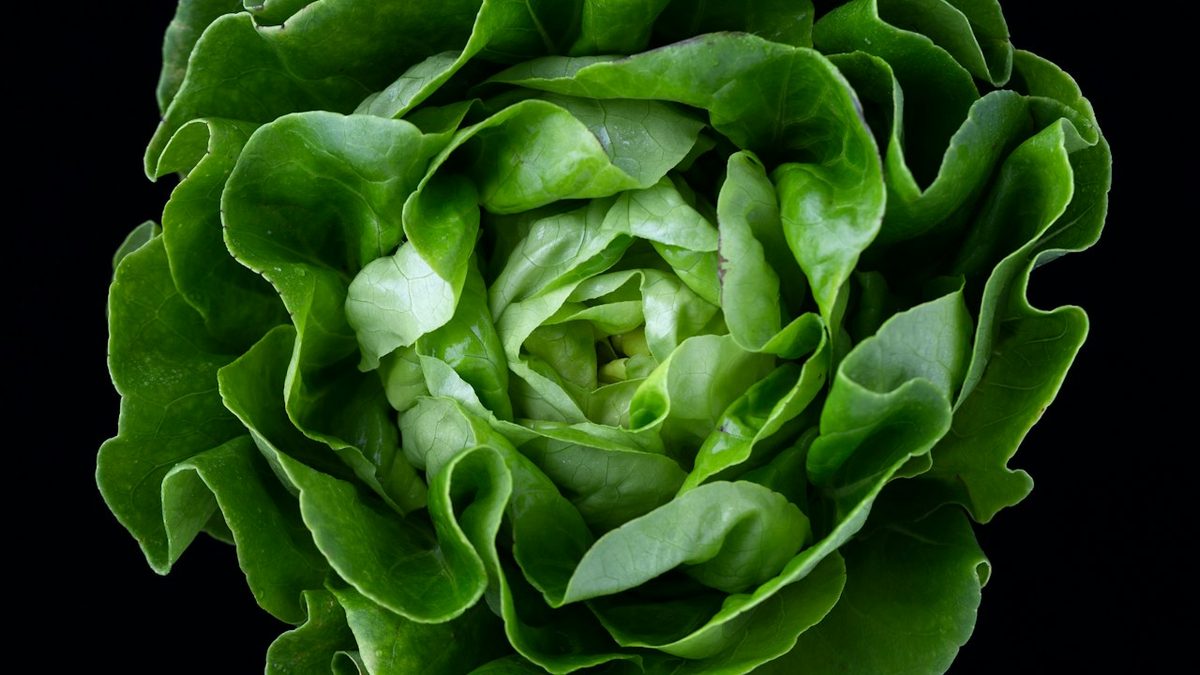
- Butterhead (Boston / Bibb): Forms loose, semi-dense heads with delicate, soft-textured, buttery leaves and folded hearts. Highly prone to field bruising and transit injury; primarily grown for local direct markets or in controlled environment agriculture (CEA) deep-water hydroponic raft systems (maturing in 50 to 65 days).
- Looseleaf (Oakleaf / Lollo Rossa / Red Salad Bowl): Produces open, non-heading rosettes of deeply lobed, frilled, or undulating foliage ranging from vibrant lime green to deep burgundy. Harvested as whole rosettes or stripped repeatedly for specialty gourmet baby-leaf salad packs (maturing in 40 to 50 days).
Thermal Windows and Evaporative Cooling Responses
Lettuce is physiologically adapted to moderate maritime or cool-season climates. Ideal day temperatures range between 65°F and 72°F (18°C to 22°C), paired with cool nighttime temperatures between 45°F and 52°F (7°C to 11°C). When daytime temperatures consistently exceed 80°F (27°C), internal stem elongation accelerates, plants accumulate bitter sesquiterpene lactucarium latex, bacterial soft rot colonizes inner head margins, and catastrophic seed stalk bolting occurs.
2. The Physiology of Tipburn: Calcium Transport and Vapor Pressure Deficit
Tipburn represents one of the most financially devastating physiological disorders confronting commercial lettuce growers worldwide. It manifests as localized marginal necrosis and cellular breakdown along the edges of rapidly expanding young leaves, especially inside tightly cupped head cavities.
Because calcium is completely phloem-immobile, foliar sprays of calcium chloride or calcium nitrate provide negligible protection once head closure begins. Foliar droplets only coat exposed outer wrapper foliage, completely failing to penetrate into tightly enclosed inner heart tissues where tipburn occurs. True remediation relies exclusively on managing root pressure, soil water potential, and canopy microclimate.
3. Soil Friability, Bed Design, and Planting Systems
Commercial lettuce thrives in deep, fertile sandy loams to silt loams characterized by high water-holding capacity, rapid drainage, and organic matter levels exceeding 3.0%. Soils with bulk density greater than 1.40 g/cm3 restrict taproot elongation and predispose plants to basal waterlogging diseases.
Pelleted Precision Seeding vs Plug Transplants
Modern operations employ two distinct planting methodologies based on scale and geography:
- Direct Pelleted Drilling: Raw lettuce seeds are tiny and irregularly shaped (approx. 400,000 seeds per pound). Commercial operators utilize seed pelleting—encasing raw seeds in inert diatomaceous earth and clay binders to create uniform spherical beads. High-speed vacuum planters (e.g., Stanhay, Monosem) precision-drill seeds at 2.5- to 3.0-inch intervals, followed by mechanical or robotic camera-guided thinning to a final in-row spacing of 10 to 12 inches (26,000 to 30,000 plants per acre).
- Greenhouse Plug Transplants: Utilizing 200- or 288-cell trays, greenhouse plugs are planted using automated mechanical transplanters. Transplants drastically conserve field irrigation water during stand establishment, eliminate the need for thinning crews, and ensure 98% harvest maturity uniformity across entire field blocks.
4. Precision Irrigation Hydraulics and Fertigation Scheduling
Lettuce extracts over 85% of its total water requirements from the top 10 to 12 inches of the soil profile. Maintaining continuous, uniform soil moisture without saturation is paramount for crisp texture and high pack-out percentages.
Terminating nitrogen injections 10 to 14 days prior to harvest is essential. Late-season nitrogen pushes soft, watery tissue that is highly susceptible to bacterial soft rot (Pectobacterium carotovorum) during refrigerated post-harvest transport and reduces container shelf life.
5. Pathogen Complex and Integrated Disease Management
Commercial lettuce fields are vulnerable to aggressive fungal, bacterial, and viral pathogens capable of inflicting total crop loss within a single production cycle:
- Lettuce Drop (Sclerotinia minor and Sclerotinia sclerotiorum): Soil-borne fungal pathogens surviving as hard black sclerotia for up to 8 years. The fungus attacks crown tissue at the soil line, causing sudden, dramatic wilting and total collapse of the head into a watery, rotten mass covered with white cottony mycelium. Management mandates deep moldboard plowing (burying sclerotia > 10 inches), 3-year rotations with sweet corn, and preventative applications of biological Coniothyrium minitans or boscalid at thinning.
- Downy Mildew (Bremia lactucae): Manifests as pale, angular yellow lesions bounded by leaf veins on upper leaf surfaces, mirrored by white downy sporulation beneath. Managed through multi-gene resistant seed hybrids and preventative rotations of oxathiapiprolin and cyazofamid.
- Lettuce Big Vein Disease: Caused by Mirafiori lettuce big-vein virus, vectored exclusively by the soil chytrid fungus Olpidium virulentus in cool, saturated soils below 60°F. Leaves exhibit pale, enlarged vein banding and ruffled heads that fail to firm. Control relies on laser grading for rapid furrow drainage and planting tolerant varieties.
6. Insect Pest Scouting and Vector Suppression
Arthropod management focuses heavily on vector suppression and preventing insect contamination inside tightly packed head canopies:
- Currant-Lettuce Aphid (Nasonovia ribisnigri): Unlike green peach aphids that feed on outer leaves, Nasonovia penetrates deep into the interior core of romaine and iceberg heads, where contact insecticides cannot reach. Control requires planting resistant cultivars carrying the Nr:0 resistance gene, combined with systemic insecticides (such as spirotetramat or flonicamid) applied via drip chemigation before head closing physically seals off the interior canopy.
- Western Flower Thrips (Frankliniella occidentalis): Thrips feed by rasping leaf epidermal cells, causing silvery stippling and black fecal specks. More critically, thrips vector destructive Tomato Spotted Wilt Virus (TSWV) and Impatiens Necrotic Spot Virus (INSV), which cause severe leaf bronzing, necrotic spotting, and death. Management requires field sanitation, weed-free field borders, and rotating spinetoram with abamectin.
7. Controlled Environment Hydroponics (NFT & Deep Water Raft Culture)
In addition to field production, commercial greenhouse production of butterhead and specialty looseleaf lettuce has expanded dramatically utilizing Nutrient Film Technique (NFT) channels and Deep Water Culture (DWC) floating rafts. Hydroponic systems eliminate soil-borne pathogens and allow year-round harvest cycles of 30 to 35 days from seed to harvest.
Key hydroponic parameters include maintaining solution electrical conductivity (EC) between 1.2 and 1.6 mS/cm, dissolved oxygen (DO) above 6.5 mg/L, and water temperature strictly between 65°F and 68°F (18°C to 20°C). Chilling hydroponic water during summer heat spikes prevents root death from Pythium and suppresses premature floral bolting.
8. Field Harvest Rig Operations, Coring, and Vacuum Tube Cooling
Harvesting commercial iceberg and romaine requires massive mobile field packing rigs spanning 10 to 16 beds simultaneously:
- Head Selection & Knife Severance: Cutters evaluate head firmness by gentle compression. Using specialized lettuce harvest knives with curved stainless blades, cutters slice the stem cleanly at the soil line, removing 2 to 3 dirty outer wrapper leaves.
- Field Coring and Film Wrapping: For wrapped iceberg or romaine hearts, the central core is trimmed flush and individual heads are immediately bagged or wrapped in micro-perforated film on the harvest rig platform, then packed into corrugated master cartons (typically 24 heads per carton, weighing 45–50 lbs).
- Vacuum Tube Rapid Cooling: Cartons are transported from field to cold storage within 2 hours. Pallets enter massive cylindrical vacuum tubes where pressure is lowered to 4.6 mm Hg (Torr). At this pressure, water boils at 32°F, causing a small percentage of moisture to flash-evaporate, extracting latent heat and plunging core temperatures from 75°F to 34°F in precisely 20 minutes without wetting the leaves.
- Cold Storage & Ethylene Management: Maintain cold chain at 34°F (1.1°C) with 98% relative humidity. Lettuce is exceptionally sensitive to ethylene gas produced by ripening fruits, which induces unsightly brown russet spotting along midribs. Ensure zero ethylene exposure throughout warehouse storage and transit trailers.
9. Production Economics, Enterprise Budgeting, and Risk Mitigation
Commercial heading lettuce is a capital-intensive crop characterized by substantial operational volatility. Total pre-harvest production expenses average $3,200 to $4,200 per acre (encompassing pelleted seed, laser land leveling, drip equipment, fertilization, automated thinning, and pest management). Harvest, packing, and cooling add an additional $1,800 to $2,500 per acre.
Average pack-out rates reach 800 to 1,100 cartons (24-count) per acre. Wholesale spot market prices fluctuate from $12 to over $35 per carton depending on regional weather patterns. Forward supply-chain contracting with major retail supermarkets and food service distributors remains the primary risk-mitigation strategy deployed by commercial producers to guarantee steady baseline margins.
10. Frequently Asked Questions (Technical Lettuce Agronomy FAQ)
Q: What is the single most effective cultural practice to reduce inner-leaf tipburn in romaine lettuce?
Managing nighttime root pressure through evening irrigation. Ensuring the soil root zone is fully rehydrated before sunset allows positive root pressure to develop throughout the dark hours. When humidity is high at night and stomata are closed, root pressure forces guttation fluid rich in dissolved calcium into tightly enclosed inner heart tissues, fortifying cell walls against daytime collapse.
Q: How does soil salinity affect head firmness and weight in crisphead iceberg lettuce?
Lettuce is moderately sensitive to salinity, with yield reductions occurring when soil ECe exceeds 1.3 dS/m. High soluble salts reduce root water uptake, leading to smaller head diameters, failure of wrapper leaves to cup tightly, loose puffy head density, and increased susceptibility to marginal leaf necrosis.
Q: Can growers safely spray foliar calcium during late head formation to treat emerging tipburn?
Foliar calcium sprays applied during heading provide virtually zero benefit for tipburn. Because calcium cannot move via phloem from outer leaves to inner leaves, foliar sprays only coat the exterior wrapper leaves, completely failing to contact the vulnerable interior heart leaves where tipburn originates. Focus entirely on root-zone water management.
Q: What causes unsightly brown russet spotting on lettuce midribs during post-harvest storage?
Russet spotting is a physiological disorder caused by exposure to trace levels of ethylene gas (as low as 0.1 ppm) in combination with storage temperatures above 36°F (2.2°C). Ethylene stimulates phenylalanine ammonia-lyase (PAL) enzyme activity, synthesizing brown phenolic compounds in midrib tissue. Store lettuce strictly in ethylene-free facilities at 34°F.
Q: What is the difference between direct pelleted seeding and transplanting in terms of crop uniformity?
Direct pelleted seeding requires extensive precision tractor thinning and is vulnerable to soil crusting, often resulting in an 80-85% uniform stand and staggered harvest cuts. Greenhouse plug transplants achieve 96-98% uniform stands, enabling crews to execute complete single-pass harvest cuts, saving substantial field labor and machinery fuel costs.