Commercial shoulder-season and winter market gardening represents one of the most profitable frontiers in sustainable vegetable horticulture. Extending high-quality fresh vegetable harvests through late autumn, sub-freezing winter months, and early spring transforms seasonal cash-flow dynamics, preserves experienced farm labor year-round, and captures premium off-season wholesale and direct-market pricing. Successful unheated winter production relies not on energy-intensive supplemental heating, but on physiological plant freeze-tolerance mechanics, cellular cold acclimation, passive solar thermodynamic engineering, multi-layer microclimate buffering, and the Persephone Period day-length ceiling.
The Persephone Period Day-Length Ceiling
The defining biological constraint of winter vegetable farming is not temperature, but daylight duration. When daily photoperiod drops below 10 hours per day (the ‘Persephone Period’), plant vegetative cell division and photosynthetic biomass accumulation drop to near zero, regardless of greenhouse temperature. Crops intended for winter harvest must reach 90% to 95% of full harvestable size before day length drops below 10 hours.
1. Freeze-Tolerance Physiology and Cold-Induced Cryoprotectants
Cold-hardy winter vegetables (such as spinach, kale, mâche, claytonia, and carrots) survive sub-freezing temperatures without tissue death through specialized physiological freeze-tolerance adaptations:
- Cryoprotectant Sugar Accumulation (Cold Sweetening): As temperatures decline in autumn, plants synthesize and accumulate soluble carbohydrates (sucrose, glucose, and fructose) in cytoplasm and vacuoles. This high osmolyte concentration depresses the intracellular freezing point, functioning as natural biological antifreeze while creating exceptionally sweet, tender flavor.
- Extracellular Freezing Ice Segregation: In cold-acclimated winter spinach and kale, ice formation is strictly confined to intercellular spaces (the apoplast) outside cell walls. Intracellular water is drawn outward by osmotic vapor pressure differentials, preventing sharp ice crystals from puncturing cytoplasmic membranes.
- Membrane Lipid Unsaturation: Cell membrane phospholipids shift from saturated to polyunsaturated fatty acids, maintaining membrane fluidity and enzymatic transport function at temperatures well below 32°F (0°C).
- Latex & Osmolyte Stabilization: Specialized proteins, including dehydrins and late embryogenesis abundant (LEA) proteins, accumulate to stabilize enzymes and structural macromolecules against freezing dehydration.
2. Passive Solar Thermodynamics and Multi-Layer Microclimates
Unheated winter production relies on multi-layered passive thermal enclosures that buffer extreme sub-zero dips:
The combination of an unheated high tunnel with an internal floating row cover provides two distinct thermal zones, effectively moving the crop two USDA plant hardiness zones southward. A farm located in Zone 5 experiencing sub-zero outdoor lows (-10°F) maintains an under-cover microclimate of 18°F to 24°F, easily within the survival threshold of cold-acclimated spinach and mâche.
3. Crop Selection and Cold-Hardiness Tiers for Winter Harvesting
Selecting the appropriate botanical species and cold-tolerant cultivars is essential for unheated winter survival:
Spinach (Spinacia oleracea) remains the supreme economic crop of winter market gardening. Unlike lettuce, which suffers epidermal blistering below 24°F, cold-acclimated spinach leaves freeze solid at night, thaw naturally as morning sunshine warms the tunnel, and can be harvested repeatedly throughout the winter without quality loss.
4. Nursery Staging, Sowing Windows, and Harvest Timing
Because growth ceases during the Persephone Period (typically early November through early February in mid-latitudes), seeding dates must be backward-calculated from the Persephone start date:
- Late Summer Nursery Sowing (August 15 to September 1): Seed storage carrots, beets, and winter leeks. These slow-growing root crops require 60 to 75 days of warm autumn growth to bulk up before cold weather halts cell expansion.
- Early Autumn High-Tunnel Sowing (September 15 to October 5): Transplant winter greens (kale, collards, chard) and direct-seed spinach and salad radishes. These plantings reach full vegetative canopy architecture right as day length contracts to 10 hours.
- Late Autumn Overseeding (October 15 to November 1): Sow ultra-cold-hardy mâche and claytonia. These dwarf winter annuals germinate well in cool soils and provide steady harvests from December through February.
5. Winter High-Tunnel Ventilation and Humidity Dynamics
The greatest threat to winter vegetable production is not freezing temperatures, but excessive internal relative humidity (RH > 90%) combined with static boundary air layers:
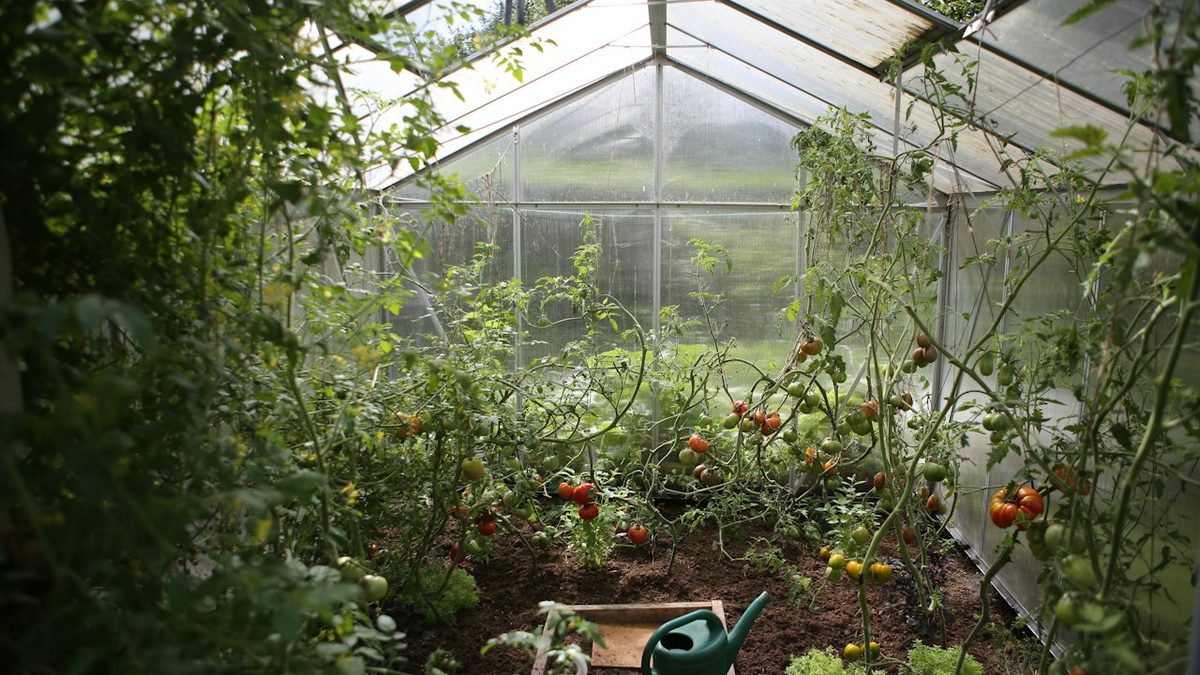
Even on freezing winter days with outside temperatures in the 20s, bright solar irradiance rapidly heats the high-tunnel atmosphere to 60°F or 70°F. Plants transpire moisture, saturating the indoor air. If tunnels remain tightly closed, condensation forms on the plastic ceiling and drips onto cold foliage, creating ideal microenvironments for devastating outbreaks of Botrytis cinerea (gray mold) and Sclerotinia sclerotiorum (drop).
The Winter Ventilation Rule
Open high-tunnel end doors or ridge vents on every sunny winter day, even when outdoor ambient temperatures are below freezing. Flushing out warm, humid air and replacing it with dry, cold outdoor air prevents leaf condensation and eliminates Botrytis crop losses.
6. In-Ground Winter Storage Mechanics for Root Crops
In addition to protected tunnel greens, commercial growers store extensive root crops (carrots, parsnips, rutabagas, turnips) directly in outdoor field beds through the winter:
Before the first hard ground-freezing freeze in November, root crop foliage is topped, and beds are covered with a thick 10- to 14-inch layer of clean wheat straw or wood shavings, topped with a woven poly tarp secured with sandbags. The deep mulch layer insulates the soil, utilizing geothermal heat to prevent the top 6 inches of soil from freezing. Growers peel back the straw mulch to dig crisp, ice-sweetened ‘candy carrots’ and parsnips to order all winter long.
7. Winter Harvesting Logistics, Thawing Protocol, and Packhouse Care
Harvesting frozen winter crops requires strict adherence to physiological handling protocols:
- The Thawing Mandate: Never touch or harvest frozen vegetable leaves. Turgid ice crystals inside the intercellular apoplast cause instant bruising and cellular collapse if handled while frozen, turning leaves into black, water-soaked mush within hours. Pickers must wait until morning sunshine thaws leaves completely and restores full turgidity.
- Cold-Water Washing Dynamics: Wash winter greens in unheated wash water (45°F to 50°F). Washing frozen or cold greens in warm water causes thermal cellular shock, damaging leaf texture and accelerating decay.
- Spin-Drying & Moisture Control: Winter greens must be spin-dried to remove all surface water before bagging in perforated polyethylene bags, ensuring a shelf life of 21 to 28 days in walk-in coolers.
8. Enterprise Economics, Off-Season Pricing, and Budgeting
Winter vegetable production captures extraordinary economic premiums compared to summer commodity pricing:
Wholesale winter spinach and winter salad greens command $12 to $18 per pound, compared to $6 to $8 per pound in summer. Furthermore, because unheated high tunnels require zero fuel expenditures, net operating margins frequently exceed 60% to 75%. An intensive 30-by-96-foot unheated high tunnel producing winter greens generates $12,000 to $18,000 in gross revenue between November and April, stabilizing year-round farm profitability and cash flow.
9. Soil Health and Salinity Management Under Winter Covers
Continuous protected culture under plastic covers eliminates natural rainfall leaching, leading to progressive accumulation of soluble fertilizer salts and carbonates in the root zone. Over several seasons, electrical conductivity (EC) can rise above 2.5 mS/cm, causing salt-induced osmotic drought and root tip burn in sensitive winter greens.
To maintain soil biological vitality, growers conduct routine soil EC testing before winter bed preparation. In late spring after winter crops are cleared, growers remove the poly plastic skin to expose the soil to natural summer rainfall flushing, or perform deep flooding with overhead sprinklers (applying 4 to 6 inches of water) to leach excess salts below the active 12-inch crop root zone.
10. Winter Drip Irrigation Hydraulics and Freeze Protection
Irrigation dynamics undergo a radical shift during sub-freezing winter market production. Transpirational water consumption drops by 80% to 90% compared to summer rates, yet maintaining adequate root-zone hydration remains vital because drought-stressed vegetables exhibit significantly lower freeze tolerance than uniformly hydrated plants. Moist soil possesses higher thermal conductivity and heat storage capacity than dry soil, radiating latent geothermal heat upward to protect juvenile crowns during severe overnight freezes.
However, standard surface irrigation lines freeze and burst if left full of water. Commercial growers install frost-free hydrants inside tunnels and operate subsurface drip lines equipped with automatic gravity drain valves at the downhill manifold ends. Irrigations are scheduled exclusively on sunny mornings at 10- to 14-day intervals, allowing drip lines to purge completely before evening sub-freezing temperatures arrive.
11. Frequently Asked Questions (Technical Winter Gardening FAQ)
Q: What physiological changes allow spinach leaves to freeze solid without dying?
Spinach accumulates high concentrations of soluble sugars in cell vacuoles and cytoplasm, lowering the freezing point. When temperatures plummet, ice crystals form exclusively in the extracellular apoplast, drawing water out of the cells without puncturing delicate cytoplasmic membranes.
Q: What is the Persephone Period, and how does it determine winter planting dates?
The Persephone Period refers to the winter timeframe when daylight drops below 10 hours daily. Because photosynthetic cellular division halts during this window, all winter vegetable crops must be seeded early enough in autumn to reach 90-95% of mature harvestable size before the Persephone Period begins.
Q: Why is high relative humidity more dangerous to winter tunnel crops than freezing temperatures?
High humidity (RH > 90%) combined with leaf condensation creates an ideal environment for devastating Botrytis cinerea (gray mold) and Sclerotinia drop infections. Even on sub-freezing days, growers must ventilate tunnels to exchange damp indoor air with dry outdoor air.
Q: Why must winter greens never be harvested while frozen?
Handling leaves while frozen crushes fragile extracellular ice crystals into neighboring cell walls, rupturing membranes and causing irreversible cellular collapse. Pickers must wait until morning sunlight warms the canopy and leaves thaw naturally before harvesting.
Q: How does double-covering with row covers inside a high tunnel alter USDA hardiness zones?
Adding an internal heavy floating row cover (1.5 oz/yd²) over wire hoops inside an unheated high tunnel provides an additional 4°F to 8°F of thermal protection, effectively shifting the local climate two USDA hardiness zones warmer.
Q: What causes cold-sweetened winter carrots to taste vastly superior to summer carrots?
Under prolonged exposure to cold temperatures above freezing, carrot roots hydrolyze complex starches into simple sugars (glucose and sucrose) to lower cell freezing points. This cold-induced sweetening produces exceptionally crisp, sweet roots prized by chefs.
Q: What wash water temperature should be maintained when processing fresh winter greens?
Wash water should be kept at 45°F to 50°F. Using warm wash water shocks cold plant tissues, breaking down cell turgidity, accelerating enzymatic decay, and slashing storage shelf life.
Q: How do growers manage snow load accumulation on unheated winter high-tunnel structures?
Growers utilize gothic-arch high-tunnel frames with steep 45-degree roof pitches that naturally shed snow. In heavy blizzards, growers temporarily close internal vents, allowing passive ground heat to warm the upper polyethylene film and slide snow packs to the ground.
Q: How does winter solar angle impact bed orientation and spacing in protected structures?
During winter months, low solar declination angles cast long shadows from tunnel frames and purlins. Commercial high tunnels are oriented east-to-west in high latitudes to maximize low-angle southern solar radiation capture, while north-side beds are planted to shade-tolerant greens like mâche and claytonia.
Q: What criteria determine whether an unheated caterpillar tunnel or permanent high tunnel is chosen?
Permanent gothic-arch high tunnels offer superior structural wind and snow load resistance, automated ventilation, and longevity for multi-year intensive cropping. Low-cost temporary caterpillar tunnels offer unmatched mobility, enabling growers to easily dismantle and rotate structures over adjacent field plots to avoid soil salt and disease accumulation.